Patrick Wolfe, Settler Colonial Theory, and the Jews
.
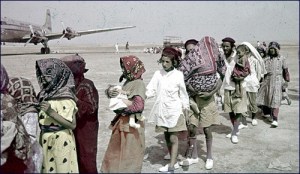
Settler-Colonial Theory is a popular academic theory that, among other things, claims to provide an analysis of Zionism and Israel. Patrick Wolfe, the Australian/English academic who was the foremost exponent of this theory explained he wanted to describe “the last European settler colony to be established on Earth – which is Israel”. But whatever one thinks of Israel, it is an unusual European settler colony if it is one at all. A European colony should have a European home country (called “metropole” in the anti-colonial literature): Australia was an English Colony settled by English people, Quebec a French one, Brazil was Portuguese, and so on, but in Wolfe’s telling: “Zionism originated as an international movement that consciously avoided confinement to a single metropole in favour of a supportive transnational umbrella”. So Israel is supposed to be a European colony that uniquely among European colonies does not have a European home country. Complicating the picture is the awkward fact that the largest demographic of Jewish settlers in Israel are descendants of refugees from the Middle East and North Africa. Along with Jewish Yemenis, Moroccans, Persians, Tunisians, Egyptians and others there are a million Bavli (Babylonian) Israelis with families from Jewish community in Iraq that dates from before the European nations existed. There is nothing analogous to Israel’s regional refugees in the histories of any of the European Colonies.
Wolfe’s focus is on Jewish settlers who came to Palestine from Europe who he imagines were predominately financiers.
So they [the Zionists] set out to establish an autonomous state based on agricultural communities that would be self-sufficient. Of course, having been excluded from agriculture and productive industry in Europe, so that they’d been forced into parasitic occupations like money-lending and condemned as such – this is where the racist image of the Jew as greedy hoarder came from – these people arrive in Palestine quite incompetent as agriculturalists. [Politica] (my bold)
Wolfe returned to the same theme in his “Elimination of the Native” essay published in the so-called “Journal of Genocide” :
… a Jewish population that had been relegated to urban (principally financial) occupations that were stigmatized as parasitic by the surrounding gentile population—a prejudice that those who sought to build the “new Jew” endorsed insofar as they resisted its internalization. [Elimination]
None of that is true. Most of Jewish immigrants from Europe were not bankers, of course. A transnational colony settled by money lenders would be quite an unusual European colony on its own, but in an essay called “Purchase by other Means”, Wolfe lists some other differences (the list seems to be mostly from but is not attributed to Sayegh’s book [Sayegh] ).
- Unlike the loot driven European colonies of North and South America, Australia, and elsewhere there was no profit motive behind the Zionist project. Per Wolfe: absent a profit motive ”donors who funded the world Zionist project differed from the speculators who had financed territorial expansion in Australia and North America.” [Purchase].
- Unlike North and South American colonial adventures and Australia, the settlers neither enslaved the “indigenous” inhabitants nor imported slave labor. In fact, the Zionist emphasis on Jewish labor is a major topic for Wolfe who takes it as ominous.
- Modern Zionist immigration to Palestine started in the early 1800s but until 1948 the Jewish settlers had to buy land under a previously established system of property rights. Here’s Wolfe: “In the Zionist case, however, the acquiring [of land] had to be effected within the terms of an imperial legal system that could not be swept aside or imposed on in the way that settlers had dealt with Indigenous legal systems in the USA or Australia. This legal system was based on the Ottoman tanzimat land reforms of the mid-nineteenth century, which were largely inherited and maintained by the British during the Mandate era and even, to a significant extent, by the post-nabka Israeli state”[Purchase]. Wolfe notes: “So they’re different to an ordinary settler colony in that they had to proceed through legal channels [Politica]. The word “different” here is a remarkable understatement.
- Also unusual is that there were Jewish people living in Palestine itself, continuously, from antiquity before “colonization”. Wolfe writes: “Moreover not all of those [Jews] who were in Palestine left [after the Roman destruction of Jerusalem in 70AD], but that’s a different story”[Politica]. A different story!
Wolfe’s explanation for so many aspects of Zionism that don’t match the usual properties of European Colonies is that Zionism was secretly European Colonial in intention and plan even when it failed to live up to the model.
“Zionism presents an unparalleled example of deliberate, explicit planning. No campaign of territorial dispossession was ever waged more thoughtfully” [Traces].
The theme of a secret plan of Jewish money lenders is not novel in European literature. Wolfe tells readers that this plan was was “eliminationist” from conception.
Settler colonialism destroys to replace. As Theodor Herzl, founding father of Zionism, observed in his allegorical manifesto/novel, “If I wish to substitute a new building for an old one, I must demolish before I construct.” […] As such, the conquest of labour was central both to the institutional imagining of a goyim-rein (gentile-free) zone and to the continued stigmatization of Jews who remained unredeemed in the galut (diaspora) [Elimination]
Goyim-rein is Wolfe’s unpleasant invention, certainly not anything that came from Herzl: a mocking reference to the Nazi genocidal Juden-rein slogan . But Herzl’s utopian “New Society” in his “manifesto/novel” was not particularly concerned with racial purity. The New Society has equal rights for all (even women!). Here’s a passage:
“Just look at that field! It was a swamp in my boyhood. The New Society bought up this tract rather cheaply, and turned it into the best soil in the country. It belongs to that tidy settlement up there on the hill. It is a Moslem village-you can tell by the mosque. These people are better off than at any time in the past. They support themselves decently, their children are healthier and are being taught something. Their religion and ancient customs have in no wise been interfered with. They have become more prosperous – that is all.” [Herzl]
You see – those Jews even underpaid for real-estate! Wolfe’s predecessor in European Anthropology, the Enlightenment philosopher Immanuel Kant was also concerned with the financial practices of European Jews.
The Palestinians living among us have, for the most part, earned a not unfounded reputation for being cheaters, because of their spirit of usury since their exile. [Kant]
Kant called the Jews living in Europe “Palestinians”, something his audience would have understood immediately since northern European gentiles before the 21st century generally considered European Jews to be not Europeans at all, but swarthy Middle Eastern (Levantine) foreigners in “exile”. Kant goes on to explain that living on “caravan routes” in the Levant predisposed these Jewish Palestinians to unsavory business practices. There’s no discussion in Wolfe’s work or in the wider settler-colonial theory literature of how after the second world war, in the European imagination the surviving Jews from Europe, stopped being dark skinned Levantine foreigners and conveniently became white European Colonialists while retaining their disreputable banking practices and plotting. There is also no discussion of the role of European oppression and genocide of the Jews in motivating the Jewish migration to Palestine and how that influenced the “deliberate, explicit, plan” of Zionism. Wolfe’s first book (his Ph.d. thesis) was about how English anthropologists in Australia imposed their colonial and racist ideas on their supposedly dispassionate studies of Australian aborigines, but he seems to have never considered whether his own objectivity and assumptions could be questioned.
For contrast, here’s a historian on the Zionist immigrants who came from Europe.
In the final decades of Ottoman rule, the Jewish population expanded dramatically, mainly due to Ashkenazi immigration, which intensified after 1881. As recently demonstrated by Gur Alroey (2014), this wave of migration was driven primarily by economic considerations, and not – as has generally been assumed – by Zionist ideology. Studying Jewish immigration to Palestine between 1904 and 1914, Alroey has shown that migrants to Palestine were almost identical in profile to Jewish migrants to the USA of the same period: merchants, professionals, artisans, and peddlers, driven by hardship in the Pale of Settlement, and swept by the enormous wave of migration from the 1870s onwards. Families with children made up the majority of migrants. Only about 15% arrived in Palestine intending to settle in the colonies, while over 75% preferred Jaffa or Jerusalem. Of 35,000 immigrants, fewer than 2,000 were labourers, and ideological pioneers made up a narrow group of several hundreds. [Lockman]
It’s not as if Wolfe’s treatment of Palestinian Arabs or Middle Eastern Jews has more depth than his treatment of Jews from Europe. Sayegh’s 1965 book, which is profoundly hostile to Zionism, and seems to have originated the “transnational” formulation has much more information on the Palestinian Arab response to and resistance to Zionism. Palestinian Arabs in Wolfe’s work fill the role of what traditional European anthropology calls “natives”, or more recently “indigenous”, without any agency or complexity or even economic classes – just an undifferentiated passive mass. One would never know from the Settler-Colonial Theory literature, for example, that in 1947, Sami Taha, an Arab union leader was assassinated in Haifa, apparently on orders of Amin al Housayni. In fact I don’t recall seeing either name or any discussion of Mandate era trade unions or of economic class in the Settler-Colonial Theory literature. This is a left-wing flavored anti-colonial historical analysis that doesn’t consider economic class at all.
As a final note, my point here is not to defend or to condemn Zionism or Israel or even the dubious merits of Theodore Herzl’s novel. The weakness of the claim that Israel is a European colony does not imply that Zionism was good or bad or justified or not. My intention here is to critique the scholarly failure, false Olympian objectivity, and European anti-semitism, of the characteristically European colonial literature of “Settler-Colonial theory” .
References
Politica. J. Kēhaulani Kauanui, Patrick Wolfe, Settler Colonialism Then and Now. A Conversation between, on “Politica & Società, Periodico di filosofia politica e studi sociali” 2/2012, pp. 235-258, doi: 10.4476/37055
Lockman. Lockman, Zachary. Comrades and Enemies: Arab and Jewish Workers in Palestine, 1906-1948. Berkeley: University of California Press, c1996 1996. http://ark.cdlib.org/ark:/13030/ft6b69p0hf/
Herzl. Theodor Herzl, Autneuland (Tel Aviv) , Translated from the German by Dr. D. S. Blondheim, Federation of American Zionists, 1916, Essential Texts of Zionism (via Internet Archive)`
Elimination. Patrick Wolf, (2006) Settler colonialism and the elimination of the native, Journal of Genocide Research, 8:4, 387-409, DOI: 10.1080/14623520601056240
Sayegh. Fayez Sayegh, Zionist Colonialism in Palestine, Palestine Monographs, Research Center PLO, 1965
Traces. Traces of History:Elementary Structures of Race, Wolfe, 2016.
Kant. Immanuel Kant, Anthropology from a Pragmatic Point of View, 1790.
 krebscycle
Leave a comment