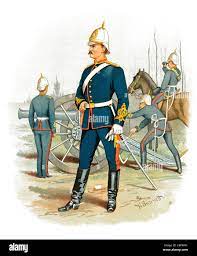
Economists, even liberal (in the US sense) economists, generally consider the United Kingdom in the 1820s to be the exemplar of the minimal state. This is a strange way to view an empire that had conquered half the world , ran on enormous public debt despite Europes highest tax burden, violently crushed labor unions, imposed tariffs to protect domestic industry, provided the muscle for the African slave trade, looted and colonized entire continents, and even ran a giant international narcotics business. These economists seem unaware that the UK government operated the worlds biggest manufacturing and R&D plant where it developed the machine tools that powered the industrial revolution and the military technology that it used to impose its empire – all at public expense. The inhabitants of the UK, paying pervasive taxes on everything from tea to salt, subject to “impressment” for the Navy (and flogging or hanging if they resisted), forced labor “poorhouses” if they became paupers, and attacks by soldiers if they asked for representation in Parliament, didn’t experience the UK government as “minimal”.
To see how the free market operated in those days consider the period in the 1840s when UK industry was unable to compete against Chinese consumer manufacturing of goods like porcelain (which is why we call china, china). This caused a drain on hard currency from the UK to China. Left on its own by the laissez-faire state, UK manufacturing innovated, reorganized, improved efficiencies and – oh sorry that’s not what happened. What happened was that a British government supported narcotics cartel scaled up opium production in India (using punitive taxation to encourage cultivation) and sold it in China where Chinese government objections to drug dealing were overcome by heavy artillery – shell a few civilian cities, burn some, steal, extort payments, etc. . You can still see some of the loot in the British Museum.

Hobbes imagined a powerful state as the enormous Leviathan but Economists have reimagined Leviathan as a minimal state that left the economy to operate under its own command and private initiative. By positioning the imperial state as minimal, economists were able to complain that public schools, public investment in housing, efforts to reduce inequality, and similar were expansions of government power that interfered with the “natural” functioning of the market – in contrast to the free functioning of forced labor under the gun and whip of the world empire. According to these economists, the “nanny state” reached to trample liberty by taxing corporations to pay for day care, unlike the “minimal state” that operated a brutal narcotics cartel to fix a balance of payments problem and sent labor unionists to the hangman. This ideological sleight of hand has been so successful that it influences even liberal economists
[Adam] Smith claims that the system of natural liberty; with government restricted to the rule of law, infrastructure, defense, and education; is the best of all social arrangements. Brad Delong.
Only law, infrastructure, military, and education!!! Hardly there at all, and pretty much invisible to economists if not to historians or kidnapped people worked to death under terror enforced slavery in sugar cane fields. During the Obama administration supposedly liberal economists like Robert Reich and Christina Romer attacked the rescue of the auto industry and efforts to revive manufacturing (successful ones) as interfering with the proper structure of financial markets because even liberal/left economists have internalized the mythology that the Imperial Leviathan didn’t manage the economy.
see also Robert Reichś Paper Wizard Economcs and Hayek’s fraud.


Leave a Reply